
What if the sharp groin pain you feel while walking through Danga Bay isn’t a sign that you need surgery, but a signal that your hip’s mechanics are simply out of balance? It’s frustrating to deal with that deep stiffness every time you stand up from your office chair or to worry that your favorite weekend strolls in the local parks are becoming a thing of the past. You’ve likely tried rest and temporary fixes, yet the discomfort persists, leaving you fearful that a hip replacement is your only inevitable future.
Finding effective hip pain treatment jb doesn’t have to mean jumping straight to invasive procedures or relying on a cycle of medication. We understand that you want more than just a momentary reprieve; you want to understand why the pain started and how to stop it from returning. By focusing on the biomechanical integrity of the joint, it’s possible to move away from symptom management and toward true recovery.
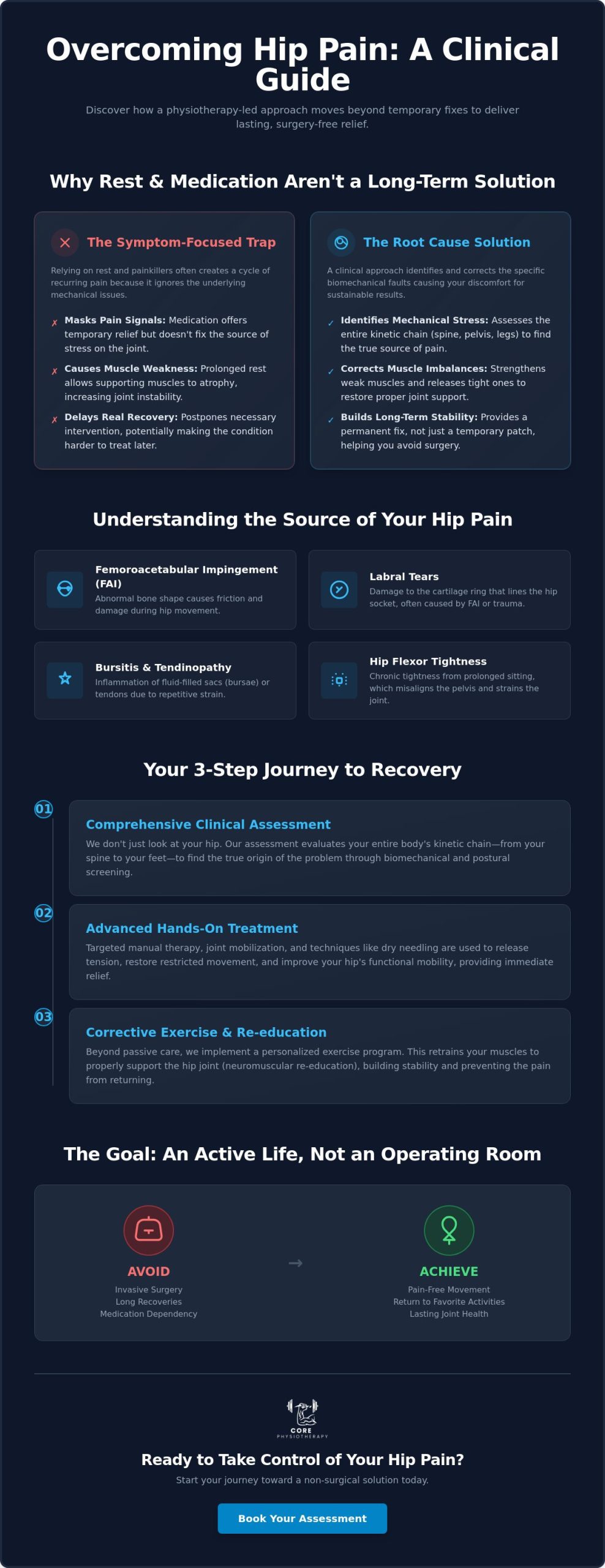
This clinical guide will show you how professional physiotherapy identifies the specific triggers of your discomfort. We’ll preview how a structured journey of initial assessment, hands-on manual therapy, and corrective movement can restore your ability to exercise pain-free and help you avoid the operating room entirely.
Key Takeaways
- Understand why resting and masking symptoms with medication often fail to resolve the complex intersection of joint, muscle, and nerve issues.
- Discover how a comprehensive clinical assessment identifies the root cause of your pain by evaluating your body’s entire kinetic chain.
- Learn how specialized hip pain treatment jb utilizes clinical manual therapy and joint mobilization to restore restricted movement and improve functional mobility.
- Explore the concept of neuromuscular re-education and how corrective exercises teach your muscles to support your hip joint effectively.
- Gain clarity on how an evidence-based, non-surgical protocol can help you return to your favorite activities without the need for invasive procedures.
Understanding Persistent Hip Pain: Why Rest Often Fails
Many people believe that staying off their feet is the best way to heal. While acute injuries need initial protection, chronic hip pain often tells a different story. True hip pain is a complex intersection where the joint, surrounding musculature, and neural pathways meet. When you stop moving, you aren’t just resting; you’re often allowing the supporting muscles to weaken. This leads to a cycle of muscle atrophy and increased joint stiffness that makes movement even more difficult over time.
Seeking effective hip pain treatment jb often begins when a person realizes that their discomfort returns the moment they resume daily activities. Painkillers may mask the signal, but they don’t fix the mechanics. Once the chemical effect of a pill or injection wears off, the underlying inflammation typically returns because the root mechanical stress remains unaddressed. This cycle can be exhausting, yet it’s a clear indicator that the body requires a functional change rather than just a chemical one.
It’s also vital to recognize that the source of the pain isn’t always where you feel it. Referred pain is a common clinical phenomenon where issues in the lumbar spine or pelvic floor manifest as deep hip discomfort. Without a thorough investigation, you might spend months treating the hip when the real culprit lies elsewhere in the kinetic chain. Understanding this complexity is the first step toward a recovery that actually lasts.
Common Causes of Hip Dysfunction in Active Adults
Active adults often face specific structural challenges that require specialized attention. Femoroacetabular Impingement (FAI) occurs when the bones of the hip joint don’t fit together perfectly, causing friction during movement. This can eventually lead to labral tears, where the ring of cartilage surrounding the socket becomes damaged. Other common causes of hip pain include bursitis and tendinopathy, which are frequently the result of repetitive strain. In a city like Johor Bahru, many professionals spend long hours at desks. This sedentary lifestyle leads to chronic hip flexor tightness, which pulls the pelvis out of alignment and places undue stress on the joint during even simple walks.
The Problem with Symptom-Focused Treatments
Many traditional approaches focus solely on the “what” rather than the “why.” Injections and anti-inflammatory medications provide temporary chemical relief, but they don’t change how your hip moves. If a tendon is inflamed because a muscle is too weak to support it, the inflammation will persist until that weakness is corrected. This is why we advocate for a shift toward clinical analysis. Relying on temporary fixes can delay necessary intervention, making the eventual recovery process longer. A precise hip pain treatment jb strategy must begin with a clinical assessment that looks beyond the surface to understand the specific movement patterns causing your distress.
The Path to Recovery: Clinical Hip Assessment in Johor Bahru
Recovery doesn’t begin with a treatment; it begins with a deep clinical investigation. To provide lasting hip pain treatment jb, we must look beyond the immediate area of discomfort. The hip joint serves as the body’s central pivot point, acting as a bridge between the spine and the lower limbs. If your foot arches collapse or your lower back lacks sufficient stability, your hip joint often absorbs the resulting stress. This interconnectedness is known as the kinetic chain, and it’s the focus of our diagnostic process.
During a thorough assessment, a therapist identifies the specific muscle compensations that have developed over time. When one muscle group weakens, another must work twice as hard to maintain balance. This overcompensation leads to uneven joint wear and chronic inflammation that rest alone cannot fix. Establishing this biomechanical baseline is the essential foundation at a pain management clinic in Johor Bahru, ensuring that every subsequent therapy session is targeted and effective.
Biomechanical and Postural Screening
Biomechanical assessment is the systematic study of movement to find the root cause of pain. We begin by evaluating your standing posture and pelvic tilt. An excessive forward or backward tilt can significantly increase pressure within the hip socket, contributing to common causes of hip pain like labral irritation or early-onset wear. By analyzing your gait, or walking pattern, we can spot subtle imbalances that occur with every step. These small errors, repeated thousands of times a day, are often the true drivers of persistent discomfort. If you’re ready to stop guessing about your health, undergoing a professional movement assessment in Johor Bahru is the most proactive step you can take today.
Functional Strength and Mobility Testing
Stability is just as vital as flexibility. We specifically test the gluteal muscles, which serve as the primary stabilizers for the hip joint during weight-bearing activities. When these stabilizers are compromised, the body often recruits smaller, less efficient muscles to pick up the slack, leading to the overuse injuries previously discussed. We also measure your joint’s range of motion against clinical norms to identify specific structural or muscular restrictions. This objective data is the cornerstone of a comprehensive hip pain treatment jb strategy. It allows us to move away from superficial fixes and toward a precise, evidence-based recovery plan that addresses your unique physical profile.
Advanced Treatment Techniques: Manual Therapy and Dry Needling
Once the clinical assessment has pinpointed the mechanical drivers of your discomfort, the focus shifts to targeted intervention. Effective hip pain treatment jb requires a sophisticated approach that goes beyond the surface. It’s essential to distinguish clinical manual therapy from a general wellness massage. While a massage focuses on general relaxation and soft tissue pampering, manual therapy is a targeted, evidence-based discipline used to restore specific joint mechanics and desensitize irritated tissues.
Hands-on therapy serves as a vital bridge in the rehabilitation process. It creates a critical window of opportunity by reducing acute pain and increasing range of motion, allowing you to eventually progress toward Corrective Exercise for Hip Stability. By combining these manual techniques with clinical precision, we can effectively “reboot” the neuromuscular system and prepare the body for the active phases of long-term recovery. This synergy between passive relief and active restoration is what defines a truly successful clinical outcome.
The Role of Manual Joint Mobilization
Manual joint mobilization involves the application of skilled, passive movements to the hip joint. Clinical therapists use specific grading systems to apply controlled force, which helps improve the natural “glide” and “roll” of the femoral head within the socket. This methodical approach is essential for reducing intra-articular pressure, which is frequently the source of that deep, “pinched” sensation in the groin. Unlike invasive injections that merely introduce fluid into the joint, mobilization works with your body’s natural physiology to restore space and improve lubrication within the joint capsule. Patients typically notice an immediate reduction in stiffness and a restored sense of fluid movement after a single session.
Dry Needling for Targeted Muscle Release
When chronic hip pain persists, the surrounding muscles often develop deep-seated trigger points, particularly in the piriformis and gluteal groups. These hyper-irritable bands of muscle can refer pain down the leg or cause significant local tenderness during daily activities like walking or climbing stairs. Dry needling is a highly effective clinical tool used to address these issues directly. While it uses the same sterile filaments as acupuncture, the methodology is rooted in Western anatomical science and neurophysiology rather than traditional meridians. Dry needling uses sterile filaments to stimulate a “local twitch response” in tight muscle bands. This involuntary contraction helps the muscle fibers reset, improving local blood flow and immediately reducing chemical sensitivity. It’s a precision-based method that reaches deep tissues that manual pressure alone often cannot access, providing a foundation for pain-free movement and supporting your overall hip pain treatment jb plan.
Beyond Passive Care: Corrective Exercise for Hip Stability
While manual therapy and dry needling create a vital window of relief, long-term recovery depends on what you do with that newfound mobility. True hip pain treatment jb isn’t complete until we address the functional deficits that allowed the pain to develop in the first place. We shift the clinical focus from merely feeling better to moving better. This phase of care is about building a body that is resilient enough to handle the demands of your daily life without breaking down.
This transition involves a process called neuromuscular re-education. It’s the clinical practice of teaching your brain to communicate effectively with your muscles again. Chronic pain often causes the body to “shut down” certain stabilizers as a protective mechanism. We work to “re-map” these connections, ensuring that your muscles fire in the correct sequence and with the appropriate intensity. Without this step, the body tends to fall back into old, painful movement patterns the moment you leave the clinic.
A common mistake many people make is following generic exercises found on YouTube or social media. While well-intentioned, these programs lack the specificity required for root-cause recovery. A personalized program accounts for your unique hip-spine coordination. If your lower back is compensating for a lack of hip mobility, a generic “hip stretch” might actually aggravate your condition. Clinical Movement & Corrective Exercises are tailored to your specific biomechanical profile, ensuring every repetition moves you closer to your goals.
Building Pelvic and Core Stability
The gluteus medius is often considered the “key” to keeping the hip joint centered within its socket. When this muscle is weak, the pelvis tilts or shifts during weight-bearing activities, placing excessive stress on the joint capsule and labrum. We utilize specific corrective drills to improve your balance and increase your weight-bearing capacity. By integrating core strength to support the entire lumbar-pelvic complex, we create a stable base that protects the hip joint from unnecessary shearing forces during movement.
Progressive Loading and Return to Activity
Building long-term results requires a structured approach to progressive loading. This means gradually increasing the resistance and complexity of your movements to build tendon resilience and bone density. You can’t expect to return to high-impact activities like running or competitive sports without first preparing the tissues for those specific stresses. By systematically increasing the load, we ensure your hip pain treatment jb provides lasting results that integrate seamlessly into your lifestyle, allowing you to enjoy the parks and trails of Johor Bahru with total confidence.
Choosing Core Physiotherapy PLT for Hip Pain Treatment in JB
Selecting the right clinical partner is the most important decision you’ll make on your path to recovery. At Core Physiotherapy PLT, we’ve established a clinical environment at our Eco Palladium location that prioritizes depth over speed. We’re committed to evidence-based, non-surgical protocols that empower you to regain control over your body. While some facilities may focus on high patient turnover, we dedicate our resources to thorough root-cause analysis. This ensures that every individual receives a strategy tailored to their specific biomechanical needs rather than a one-size-fits-all solution.
We believe that recovery is a collaborative journey. The team at Core Physiotherapy PLT acts as dedicated guides, working alongside you to reach your personal mobility goals. Whether you want to return to competitive sports or simply enjoy a morning walk without discomfort, we align our clinical expertise with your aspirations. By choosing a specialized hip pain treatment jb provider that values long-term outcomes over temporary fixes, you’re investing in a future of sustained physical health and vitality. Our approach moves away from the institutional feel of traditional hospitals toward a more personalized and attentive healthcare experience.
Our Patient-Centered Recovery Process
The foundation of our success lies in our one-on-one sessions. You’ll work with professional therapists who take the time to understand the nuances of your condition. We maintain transparent communication regarding your diagnosis and progress, ensuring you understand the “why” behind every intervention. Core Physiotherapy PLT fosters a supportive atmosphere characterized by quiet confidence and optimism. We don’t just treat symptoms; we build your confidence in your body’s ability to heal and improve. This methodical progression from assessment to lifestyle integration is designed to build lasting trust and deliver measurable results.
Convenient Care at Eco Palladium, Johor Bahru
Located in the vibrant Eco Palladium district, our clinic offers easy access for residents across Johor Bahru and the surrounding areas. We’ve designed our space to be a modern sanctuary for physical rehabilitation, equipped with the tools necessary for advanced hip pain treatment jb. Starting your journey is a straightforward process. By booking an initial assessment, you’ll receive a comprehensive evaluation of your kinetic chain and a clear roadmap for your recovery. Don’t let persistent stiffness or fear of surgery dictate your lifestyle any longer. We invite you to book your clinical hip assessment at Core Physiotherapy PLT today and take the first step toward a pain-free future.
Take the Next Step Toward Lasting Hip Mobility
Recovery from persistent hip discomfort requires a shift from temporary relief to a structured, clinical restoration of movement. By moving beyond the “rest trap” and addressing the specific biomechanical imbalances within your kinetic chain, you can reclaim the activities you love. We’ve explored how specialized manual therapy, dry needling, and corrective exercises work in harmony to provide a non-surgical path toward long-term health.
At Core Physiotherapy PLT, our expert therapists at Eco Palladium utilize evidence-based clinical protocols to ensure you receive the most precise hip pain treatment jb available. Our focus remains consistently on root-cause movement restoration, providing you with the tools to build a resilient and pain-free body. You don’t have to navigate this journey alone; we’re here to act as your dedicated partners in health.
Ready to discover the actual cause of your discomfort and start your recovery? Schedule Your Comprehensive Hip Assessment in JB with Core Physiotherapy PLT today. We look forward to helping you move with confidence and optimism once again.
Frequently Asked Questions
Is hip pain physiotherapy painful?
Physiotherapy is designed to be a therapeutic process rather than a painful one. While certain hands-on manual therapy techniques or dry needling may cause temporary discomfort or a local twitch response, these sensations are manageable and indicate that the tissue is responding to treatment. We prioritize your comfort and adjust the intensity of each session based on your feedback, ensuring the process remains productive yet tolerable for your recovery.
How many sessions of hip pain treatment will I need in JB?
The number of sessions required for hip pain treatment jb depends entirely on the complexity of your condition and your specific recovery goals. Most patients begin to feel a noticeable improvement in mobility and a reduction in pain within three to five sessions. However, achieving long-term stability and completing a full course of neuromuscular re-education typically requires a more structured, multi-week commitment tailored to your individual progress.
Can physiotherapy help if I already have hip osteoarthritis?
Yes, physiotherapy is highly effective for managing hip osteoarthritis by improving joint lubrication and strengthening the surrounding stabilizers. While we cannot reverse structural changes in the bone, targeted movement and manual therapy can significantly reduce pressure within the joint socket. This approach helps maintain your current range of motion, reduces stiffness, and often helps patients delay or eliminate the need for more invasive surgical interventions.
Do I need a doctor’s referral to see a physiotherapist in Johor Bahru?
You don’t need a doctor’s referral to schedule an initial assessment at our clinic. In Malaysia, patients have direct access to physiotherapy services, allowing you to seek professional care immediately when symptoms arise. However, it’s worth checking with your specific insurance provider, as some policies may require a referral for reimbursement purposes even though it isn’t a legal requirement for your consultation or treatment sessions.
How is dry needling different from acupuncture for hip pain?
Dry needling is a clinical technique focused on Western anatomical principles to treat muscular trigger points and neural sensitivity. Unlike traditional acupuncture, which follows meridian lines to balance energy flow, dry needling targets specific hyper-irritable bands in the muscles that are causing referred pain or restricted movement. It’s a precision tool used to reboot the neuromuscular system and is always integrated into a broader, evidence-based physical rehabilitation plan.
What should I wear to my first hip assessment at Eco Palladium?
We recommend wearing loose-fitting sports attire or comfortable clothing that allows for easy movement. To perform a thorough biomechanical assessment, your therapist will need to observe how your hips, knees, and lower back move during various functional tests. Bringing a pair of shorts is particularly helpful, as it allows us to accurately assess joint alignment and muscle firing patterns without the restriction of heavy denim or tight trousers.
Can hip pain be caused by my lower back?
It’s very common for hip pain to actually originate from the lumbar spine or the sacroiliac joint. Nerves exiting the lower back travel through the hip region; if these nerves are compressed or irritated, they can refer pain to the groin or the side of the hip. Our comprehensive assessment process is designed to differentiate between local joint issues and referred spinal pain to ensure we treat the correct source. Patients who experience radiating leg pain alongside their hip discomfort may also benefit from exploring slipped disc treatment jb, as a herniated lumbar disc is a common cause of this overlapping pain pattern.
Is physiotherapy a viable alternative to hip replacement surgery?
For many individuals, a structured program focusing on hip pain treatment jb can successfully manage symptoms and restore function enough to avoid or significantly delay surgery. By improving joint mechanics and muscle support, we can often reduce pain to a level where high-risk procedures are no longer necessary. We work closely with you to determine if a conservative, non-surgical approach is appropriate for your specific clinical presentation.