

What if the persistent ache in your shoulder or the stiffness in your lower back isn’t the actual problem, but merely a signal of a deeper imbalance? You’ve likely tried the temporary relief of massages or the convenience of over-the-counter medication, only to find the discomfort returning just as you’re settling into a deep sleep or focusing on a critical project at work. It’s exhausting to live with the frustration of “quick fixes” that don’t last, and even more stressful to worry if surgery is your only remaining option. We understand that you don’t just want the pain to stop; you want your life and your mobility back.
This article reveals why treating symptoms alone often fails and how a professional root cause pain analysis jb can uncover the true biomechanical source of your distress. You’ll discover how a methodical, evidence-based assessment provides a clear roadmap to permanent recovery. We will preview the journey from identifying physical challenges to integrating corrective movement, ensuring you can avoid lifelong dependency on medication and move toward a future of renewed vitality and confidence.
Key Takeaways
- Learn why the site of your discomfort is rarely the actual source and how identifying the true origin is the first step toward lasting relief.
- Discover the science of the kinetic chain to understand how imbalances in one area of the body can create referred pain in seemingly unrelated regions.
- Compare the long-term value of a professional root cause pain analysis jb against the recurring costs and frustrations of temporary “quick fixes.”
- Gain insight into the clinical assessment process, including how dynamic movement analysis reveals the biomechanical patterns behind your recurring pain.
- Identify an evidence-based path to reclaim your mobility and confidence without relying on surgery or lifelong medication.
What is Root Cause Pain Analysis?
Pain is rarely an isolated event. It is often the final expression of a long-term mechanical breakdown within your body. While most people focus instinctively on where it hurts, professional physiotherapy looks deeper to understand why the discomfort exists in the first place. A clinical root cause pain analysis jb is a systematic investigation into the biomechanical dysfunctions that lead to physical distress.
In a clinical setting, Root Cause Analysis refers to a methodical problem-solving process used to identify the underlying origin of a physical ailment. It’s the difference between mopping up a puddle and fixing the leaking pipe. By shifting focus from the “site of pain” to the “source of pain,” we can achieve a resolution that lasts. This approach moves beyond the surface to understand why a specific tissue is under stress, ensuring that treatment is targeted and effective.
When one muscle group is weak or a joint is restricted, your body doesn’t simply stop moving. It adapts. It creates compensatory patterns, shifting the load to other tissues that weren’t designed to handle that specific pressure. Over time, these overworked areas become the new site of pain. Treating only that site is a temporary suppression, not a cure. Our goal is to reverse these patterns and restore natural, efficient movement through a thorough initial assessment.
The “Signal vs. Source” Framework
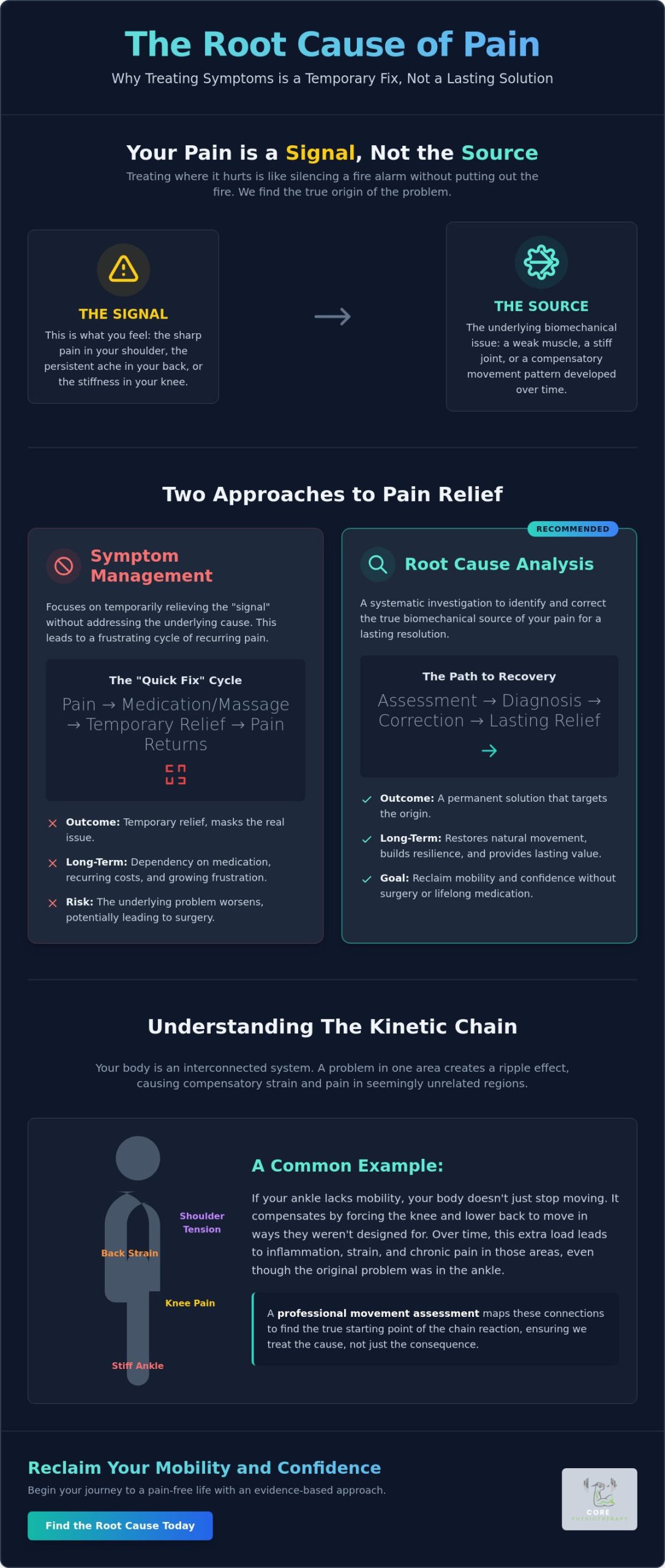
Your nervous system uses pain as a vital communication signal. It’s a warning light on your body’s dashboard. If you only “turn off” the light with medication or a quick massage, the underlying engine trouble remains. Treating only the signal leads to a frustrating cycle of recurring injury and growing anxiety. A clinical root cause pain analysis jb serves as a systematic investigation into biomechanical dysfunction, ensuring we address the engine, not just the light.
While biomechanics are critical, addressing the internal “engine” through functional medicine can provide a more complete picture of health. High-performers looking for this deeper level of insight can explore Metabolic Testing through practitioners like 5280 Restorative Medicine to identify physiological imbalances that might be hindering their recovery and vitality.
Why JB Residents Need This Specific Approach
Living in Johor Bahru presents unique physical challenges that demand a specialized perspective. Many of our clients endure the daily “Singapore commute,” spending hours in static, cramped positions that compromise spinal alignment and hip mobility. Others spend their days at desks in booming business hubs like Eco Palladium. These sedentary lifestyle factors often contribute to “hidden” musculoskeletal issues that traditional therapy might overlook. Without a specific analysis of how your environment impacts your movement, pain will inevitably return once you resume your normal routine. For professionals whose symptoms are directly tied to their workstation setup, a dedicated ergonomic assessment johor bahru can identify how your desk environment is contributing to these hidden imbalances.
Your home and office environments also play a significant role in your physical comfort; for those in the city-state who want to refresh their space without the risk of physical strain from DIY projects, you can check out My Paint Job Singapore for professional assistance.
The Science of Movement: Why Symptoms Are Often “Liars”
Symptoms are often the loudest voices in the room, but they rarely tell the whole truth. A sharp pain in your shoulder might be the result of a rib dysfunction you didn’t even know existed, while a persistent knee ache could be a cry for help from a dormant hip muscle. This deception is why many “quick fixes” fail; they treat the symptom while ignoring the source. To achieve lasting mobility, a comprehensive pain assessment is vital to distinguish between acute signals and chronic mechanical issues.
The human body operates through the Kinetic Chain, a concept where every joint and muscle influences the next. When one segment stops moving correctly, the brain instinctively “shuts down” certain muscles and recruits others to compensate. This process, known as neuromuscular inhibition, protects you in the short term but creates a long-term cycle of imbalance and recurring injury. A thorough root cause pain analysis jb looks at these global patterns to find exactly where the chain is broken, rather than just rubbing the spot that hurts.
The Kinetic Chain Explained
Consider how a stiff ankle can ripple upward. If your ankle lacks the necessary range of motion, your body will seek that movement from the knee or the lower back instead. Over time, those joints become overworked and inflamed because they are doing a job they weren’t designed for. Core stability acts as the anchor for this chain; without a stable trunk, your distal joints like the shoulders and hips become vulnerable to strain. Undergoing a movement assessment johor bahru allows us to map these connections and identify the true origin of your discomfort.
Common Compensatory Patterns
In our clinic, we frequently see “Upper Cross Syndrome” among JB professionals who spend long hours at computers. This pattern involves tight neck and chest muscles paired with weak mid-back muscles, leading to chronic headaches and shoulder tension. We also see “Gluteal Amnesia,” where the glutes “forget” how to fire after hours of sitting, placing immense pressure on the lumbar spine. Our therapists use precise observation to identify these “silent” restrictions before they lead to long-term disability. If you’ve struggled with pain that won’t go away, it’s time to experience a patient-centered approach that prioritizes your unique movement profile and long-term health. Many patients are also surprised to learn how much of what they believe about therapy is based on myth rather than science; understanding the facts behind clinical physiotherapy johor bahru can help you make more informed decisions about your care.
Root Cause Analysis vs. Traditional Symptom Management
Choosing between symptomatic relief and a clinical investigation is the difference between managing a condition and resolving it. Traditional symptom management focuses on the immediate sensation, often providing short-term comfort that masks the underlying issue. In contrast, a clinical root cause pain analysis jb utilizes a structured method to analyze adverse events and mechanical breakdowns within the body. While a quick fix might offer instant gratification, it rarely addresses the structural imbalances discussed in previous sections, leading to a cycle of frustration and wasted resources.
Investing in a thorough assessment might seem more involved than purchasing a bottle of painkillers, but it’s the more cost-effective path. Recurring pain leads to missed work, interrupted sleep, and a gradual decline in quality of life. By committing to a systematic analysis, you’re choosing a clear, evidence-based path to long-term mobility. This approach avoids the hidden financial drain of perpetual “quick fixes” that never quite reach the finish line.
While local therapy focuses on biomechanics, many patients also benefit from the specialized resources at Nusbaum Medical Centers. For those looking to support their recovery through metabolic health, you can explore Semaglutide Weight Loss Program to see how clinical weight management alleviates joint pressure.
The Cycle of Recurring Pain
Many individuals find that their discomfort returns within 48 hours of a standard relaxation massage. This happens because while the muscles were temporarily loosened, the faulty movement patterns or joint restrictions driving the tension remain untouched. Similarly, relying on anti-inflammatories without addressing mechanics only delays the inevitable. The services provided at our pain management clinic johor bahru differ fundamentally from spa treatments. We don’t just aim for temporary relaxation; we seek to identify and correct the physical dysfunctions that cause your symptoms to reappear. For office workers whose pain consistently returns after sitting at their desks, pairing clinical treatment with a professional ergonomic assessment in Johor Bahru ensures that the workspace itself is no longer a source of ongoing mechanical stress.
While wellness centers and specialized resources from Body ‘N’ Balance are excellent for general health and specialized needs like baby massage, resolving chronic biomechanical issues requires the targeted interventions found in a clinical setting.
Structural Recovery Milestones
True recovery is a progressive journey that requires moving from a passive recipient of care to an active participant in your health. This transition happens across three distinct phases:
- Phase 1: Pain Reduction. We use targeted manual therapy to calm the nervous system and provide initial relief.
- Phase 2: Correcting Dysfunction. We address the “silent” joint restrictions and muscle imbalances identified during your assessment.
- Phase 3: Building Resilience. You learn personalized corrective exercises designed to strengthen your body and prevent future injury.
This methodical progression ensures that we aren’t just chasing pain around your body. By stabilizing the kinetic chain and restoring proper biomechanics, we help you transition from a state of vulnerability to one of quiet confidence in your physical abilities.
What to Expect During a Professional Assessment in JB
Entering a clinic for a specialized evaluation should feel like starting a dedicated partnership. It isn’t a passive experience where a therapist simply tells you what is wrong. Instead, it’s a deep dive into your physical history and current capabilities. A comprehensive root cause pain analysis jb begins with a detailed clinical history to understand your unique pain journey. We explore when the discomfort started, what makes it worse, and how it has evolved over time. This dialogue is essential because your experiences provide the first clues to the mechanical puzzle we are solving.
Next, we transition to physical observation. We analyze your static posture to see how your body carries itself at rest, but the real insights come from dynamic postural analysis. Watching how you move, bend, and rotate reveals the hidden strategies your nervous system uses to navigate the world. We utilize functional movement screenings, such as observing your gait or a squat pattern, to identify “energy leaks.” These are areas where your body loses efficiency and forces other joints to work harder than they should. This thorough root cause pain analysis jb ensures that no detail is overlooked during your evaluation.
The Diagnostic Journey
We often ask about old injuries, even those from years ago, because the body is an expert at long-term compensation. A forgotten wrist sprain or a childhood knee injury can permanently alter how you distribute weight. We also perform precise orthopedic testing and palpation to confirm structural integrity and assess joint range of motion. A professional movement assessment identifies specific muscle inhibitions that lead to joint overload. By testing muscle strength in isolation and during movement, we can pinpoint exactly where the communication between your brain and your body has broken down.
To see how advanced assessments like these are paired with specialized treatments such as medical acupuncture, you can learn more about Functional Movement Physio and their approach to clinical recovery.
Personalized Treatment Planning
Once the data is gathered, we translate these findings into a clear, evidence-based roadmap for your recovery. We don’t believe in generic protocols; your plan is built specifically for your biomechanical needs. Depending on the results of your analysis, we may integrate dry needling to release deep muscle tension or hands-on manual therapy to restore joint mobility. We set realistic timelines together, ensuring you understand the steps required to achieve your mobility goals. If you are ready to stop guessing and start healing, you can schedule your initial assessment today to begin your journey toward permanent recovery.
Reclaiming Your Mobility at Core Physiotherapy PLT
At Core Physiotherapy PLT, we believe that recovery isn’t a matter of luck but the result of disciplined, evidence-based practice. Our commitment to a thorough root cause pain analysis jb ensures that every patient receives a plan tailored to their specific biomechanical needs. We don’t just focus on the symptoms that brought you through our doors; we look at the whole person to restore function and vitality. By shifting the focus from temporary relief to structural resolution, we help you break the cycle of recurring discomfort that disrupts your work and sleep.
Our clinic is located at Eco Palladium, a central hub that allows us to serve the vibrant communities of Johor Bahru and our neighbors in Singapore. We understand the unique physical toll of the “Singapore commute” and the sedentary demands of modern office work. By combining clinical precision with a deeply empathetic approach, we act as your dedicated partner in health. We’ve moved away from the cold, institutional feel of traditional healthcare toward a personalized experience that values your long-term well-being and quiet confidence.
Expert Guidance in a Supportive Environment
Our professional therapists are dedicated to your long-term health, guiding you through each stage of the rehabilitation process with steady expertise. While hands-on manual therapy provides essential initial relief, the foundation of permanent recovery lies in our personalized corrective exercise programs. These exercises are specifically designed to address the muscle inhibitions and “energy leaks” identified during your assessment. We prioritize education throughout your journey, ensuring you understand how to maintain your results through smart lifestyle integration—a philosophy shared by mobile allied health providers like Bio Health Prosperity Wellness. This proactive approach empowers you to take control of your movement and prevent old injuries from resurfacing.
Your Path to Pain-Free Living Starts Here
Delaying treatment often allows compensatory patterns to become more deeply ingrained in your nervous system. When these habits are left unchecked, the root cause becomes harder and more complex to resolve over time. Taking action now is an investment in your future mobility, helping you avoid the need for invasive surgery or a lifelong dependency on medication. We’ve made our booking process straightforward so you can focus on what matters most: your recovery and your quality of life.
Our team is ready to help you rediscover the joy of effortless, pain-free movement. By choosing a clinical path focused on thorough investigation rather than superficial suppression, you’re choosing a future defined by health and vitality. Schedule your root cause pain analysis at Core Physiotherapy today and take the first decisive step toward a life without recurring pain.
Start Your Journey Toward Lasting Recovery
Living with recurring pain is a heavy burden, but it doesn’t have to be your permanent reality. You’ve learned how the “site of pain” is often just a signal of deeper mechanical dysfunction elsewhere in your kinetic chain. By moving beyond temporary suppression and embracing a professional root cause pain analysis jb, you can uncover the true origin of your discomfort. Our expert therapists in Eco Palladium, JB, utilize evidence-based clinical assessments to build a roadmap specifically for your body.
Through tailored corrective exercise programs and targeted interventions, we aim to restore your mobility and quiet confidence. It’s time to stop chasing symptoms and start addressing the fire beneath the smoke. Your path to a more vibrant, active life is within reach. We are here to guide you every step of the way with clinical expertise and genuine care.
Book Your Comprehensive Root Cause Pain Analysis in JB
We look forward to partnering with you on your journey toward physical improvement and long-term well-being. Your recovery is our priority, and we’re ready to help you move with freedom once again.
Frequently Asked Questions
What is the main difference between a regular check-up and a root cause pain analysis?
A regular check-up typically focuses on the immediate area of discomfort to provide symptomatic relief. In contrast, a root cause pain analysis jb involves a deep investigation into the mechanical dysfunctions across your entire body that lead to that specific pain. We look beyond the surface to identify why a tissue is under stress, ensuring we address the origin rather than just the signal.
How long does a typical movement assessment take at your JB clinic?
You should expect your initial movement assessment at our Johor Bahru clinic to take approximately 45 to 60 minutes. This duration allows our therapists to conduct a thorough clinical history, perform static and dynamic postural analysis, and complete functional movement screenings. We believe in a methodical approach that ensures no detail of your physical condition is overlooked during the evaluation process.
Can root cause analysis help with old injuries that happened years ago?
Yes, old injuries are often the primary drivers of current discomfort because the body creates long-term compensatory patterns to protect injured areas. Even if an injury happened years ago, the resulting muscle inhibitions or joint restrictions can continue to place excessive load on other tissues. Our analysis identifies these historical imbalances to help you resolve the lingering effects of past physical trauma.
Do I need a doctor’s referral for a pain analysis in Johor Bahru?
You don’t need a doctor’s referral to consult a physiotherapist in Malaysia, as patients have direct access to these services. You can directly book our specialized assessment to begin your recovery journey without delay. However, if you plan to claim your treatment through private insurance, we recommend checking your specific policy, as some individual medical cards still require a referral for reimbursement.
Is root cause analysis effective for chronic conditions like slipped discs or sciatica?
Root cause analysis is highly effective for chronic conditions like slipped discs or sciatica because it identifies why those structures are under excessive pressure. Instead of just treating the nerve pain, we investigate the hip mobility or spinal stability issues that contributed to the condition. This evidence-based approach provides a clear path to long-term relief and helps you avoid more invasive procedures. If you’re uncertain whether your current therapy is grounded in science, learning about evidence-based physiotherapy in JB can help you distinguish effective clinical rehabilitation from approaches that only offer temporary comfort.
What should I wear for my movement assessment at Eco Palladium?
We recommend wearing comfortable, flexible clothing that allows for a full range of movement, such as gym wear or athletic attire. It’s important that our therapists can easily observe your joint alignment and muscle activation during dynamic testing. If you’re coming from work, you can bring a change of clothes to our Eco Palladium location to ensure you feel at ease during the screening.
How many sessions will I need after the initial analysis is completed?
The number of sessions required varies based on the complexity of your biomechanical dysfunctions and your specific mobility goals. After completing the initial root cause pain analysis jb, your therapist will provide a personalized roadmap with clear milestones. Some patients find improvement in just a few sessions, while others benefit from a longer-term program focused on building resilience through corrective exercises.
Can this analysis help if I am currently not in pain but want to prevent future injuries?
Proactive assessments are an excellent way to identify silent joint restrictions or muscle imbalances before they manifest as physical pain. By analyzing your movement patterns while you’re healthy, we can find and correct inefficient strategies that might lead to future injury. This preventive approach is ideal for athletes or professionals who want to maintain high levels of physical performance and long-term vitality.