
What if that deep, nagging ache in your hip isn’t a joint problem at all, but a silent cry for help from your muscle tissue? You’ve likely tried resting or perhaps booked a session at a local spa, only to find the stiffness returns the moment you step back into your daily routine. It’s frustrating to feel like you’re stuck in a cycle of temporary relief while your mobility continues to decline. Finding effective hip pain treatment in Johor Bahru shouldn’t feel like a guessing game between muscle strains and joint issues. With a 10% increase in younger adults seeking help for hip discomfort as of 2025, it’s clear that modern lifestyles are taking a toll on our physical foundations.
We understand the hesitation that comes with chronic discomfort and the desire for a solution that actually lasts. This clinical guide explores how specialized myofascial release and trigger point therapy can resolve recurring pain by addressing the root cause of muscle tension rather than just masking the symptoms. You’ll discover the clinical differences between muscular and joint-related issues and learn how a methodical approach to manual therapy can restore your freedom of movement. We’ll outline a clear, professional path toward recovery that focuses on long-term vitality and physical confidence.
Key Takeaways
- Learn how the “JB lifestyle,” characterized by long commutes and desk-bound roles, contributes to hip flexor shortening and chronic stiffness.
- Understand the clinical difference between local muscle tension and referred pain, helping you identify why your hip discomfort often originates in the gluteal muscles.
- Distinguish between broad myofascial release for connective tissue and targeted trigger point therapy for hyperirritable muscle fibers.
- Discover why clinical precision tools like dry needling and joint mobilization provide a more effective hip pain treatment johor bahru than standard relaxation massages.
- Explore the structured recovery journey at our Eco Palladium clinic, moving from a root-cause assessment to personalized movement and corrective exercises.
Understanding Chronic Hip Pain in Johor Bahru: Why Rest Isn’t Enough
Chronic hip pain is rarely a simple issue of wear and tear. It typically involves a complex interaction between the hip joint, the labrum, and the dense network of surrounding myofascial release tissue. When you feel a deep ache, your body isn’t just reporting a localized injury. It’s often signaling a systemic imbalance in how these tissues communicate and move together. Many people assume that if they just sit still long enough, the pain will vanish. Unfortunately, for chronic conditions, passive rest often allows the underlying dysfunction to become more deeply ingrained.
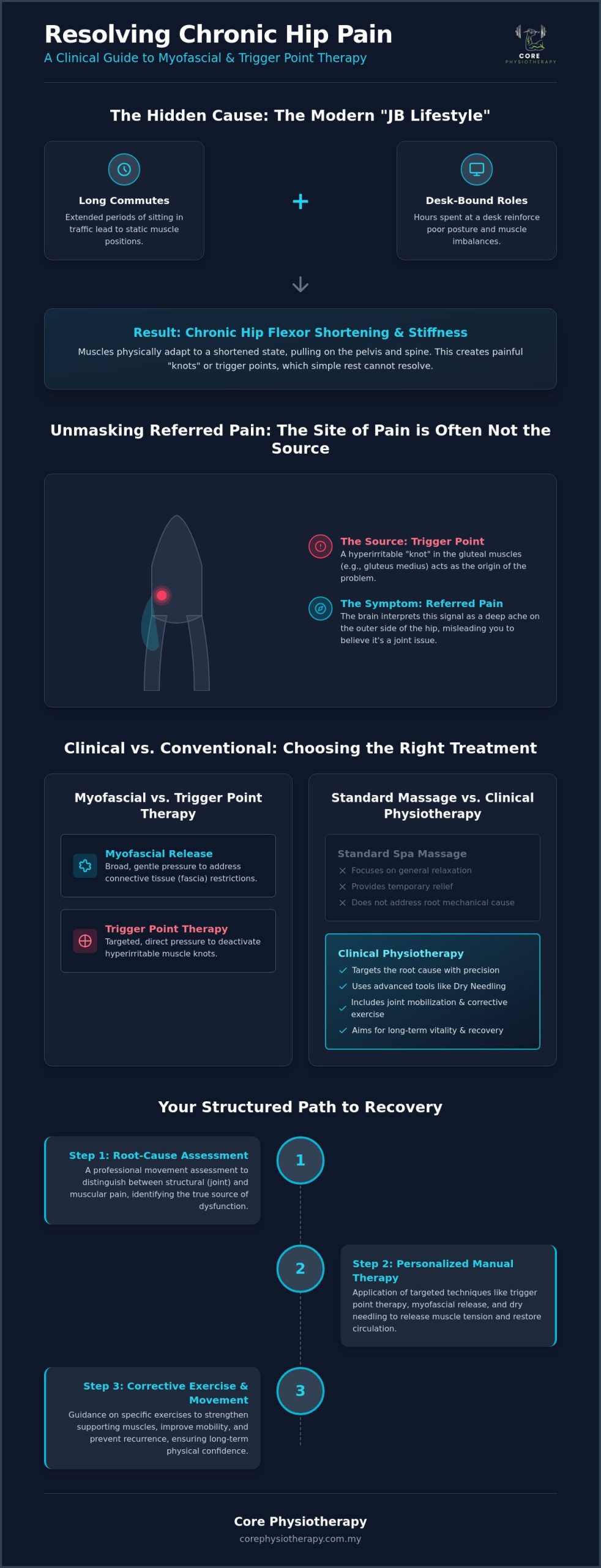
Residents in Johor Bahru face specific lifestyle stressors that contribute to these issues. The “JB Lifestyle” often involves long, sedentary commutes across the Causeway or extended hours at a desk in Singapore. This prolonged sitting leads to chronic hip flexor shortening. Your muscles aren’t just tired; they’re physically adapting to a shortened state. When you finally stand up or try to exercise, these tight tissues pull on the pelvis and spine, creating “knots” or trigger points in the gluteus medius and piriformis muscles. Standard rest doesn’t resolve these mechanical restrictions. It simply pauses the irritation until you move again. This cycle is why professional hip pain treatment johor bahru focuses on active intervention rather than just waiting for the pain to subside.
The Myth of the “Tight Hip”
It’s a common instinct to stretch a hip that feels tight. However, if your discomfort stems from protective muscle guarding, aggressive stretching can actually increase local inflammation. Your nervous system often tightens muscles to protect a joint it perceives as unstable. Yanking on those “tight” fibers can trigger a stronger contraction response, making the problem worse. Clinical hip pain treatment is a precise process of restoring both muscle length and neurological control to ensure the joint moves safely and efficiently.
When to Seek Professional Physiotherapy
Early intervention is vital to prevent your hip issues from cascading into lower back strain or knee instability. Your body is excellent at compensating, but those compensations eventually lead to secondary pain. You should seek a clinical evaluation if you experience any of the following red flags:
- Pain that radiates down the side or back of your leg.
- Discomfort that wakes you up or prevents you from falling asleep.
- A catching, clicking, or snapping sensation when you walk or rotate your leg.
- A persistent “deep” ache that isn’t relieved by standard spa massages.
A professional movement assessment in Johor Bahru is the first step toward a lasting solution. By identifying whether your pain is structural or muscular, we can create a recovery path that targets the root cause. This clarity is essential for effective hip pain treatment johor bahru, moving you away from temporary fixes and toward long-term mobility.
The Science of Hip Dysfunction: Myofascial Trigger Points and Referred Pain
A trigger point is essentially a microscopic spasm within a taut band of muscle fiber. It acts as a hyperirritable spot that remains in a constant state of contraction, even when you’re at rest. This persistent “lock” creates a physiological crisis known as ischemia. In this state, the muscle fibers squeeze local capillaries, effectively choking off the supply of oxygenated blood and nutrients. Without fresh circulation, the tissue cannot flush out metabolic waste, which leads to a localized cycle of chronic inflammation and heightened sensitivity. This is why a simple rest period rarely fixes the problem; the metabolic trap remains set until it’s physically interrupted.
The “Hip Pain Map” reveals that the site where you feel discomfort is often a liar. Many patients seeking hip pain treatment johor bahru describe a deep ache on the outer side of the hip, assuming the joint itself is failing. In reality, this pain frequently originates in the gluteus medius or gluteus minimus. These muscles are the primary stabilizers of the pelvis. When they develop trigger points, they send “referred pain” signals to the lateral hip or even down the leg. This neurological connection is so strong that it often mimics more serious conditions like bursitis or sciatica, leading to confusion and delayed recovery. Gaining a clear perspective on What is Myofascial Release? is a vital step in understanding how we dismantle these deceptive pain patterns.
Referred Pain Patterns in the Hip
Referred pain follows predictable clinical pathways. For example, the Quadratus Lumborum, a deep muscle in your lower back, frequently refers sharp pain directly to the hip crest. You might also have “latent” trigger points. These are spots that don’t cause constant pain but significantly restrict your range of motion. You only notice them when you try to climb stairs or get out of a car. During a clinical assessment, our therapists use precise palpation to find these hidden sources. By applying pressure to a specific gluteal knot, we can often reproduce the exact hip ache you’ve been struggling with, confirming the true source of your dysfunction.
Ischemia and the Healing Cycle
The primary goal of clinical therapy is to break the ischemic cycle. Sustained muscle contraction creates a metabolic “stew” of chemicals that keep your nerves on high alert. By utilizing targeted manual pressure, we can force a temporary pause in this contraction. This allows a fresh surge of oxygenated blood to enter the tissue. While many people try to use generic foam rollers at home, these tools often lack the precision needed to reach deep hip stabilizers. Professional manual therapy provides the specific angles and depths required to reset the muscle’s electrical activity. If you want to move beyond surface-level relief, a comprehensive assessment of your muscle health is the most effective way to begin your journey toward lasting comfort.
Comparing Myofascial Release vs. Trigger Point Therapy for Hip Relief
Choosing the right clinical approach is essential for resolving persistent discomfort. While many people use the terms interchangeably, Myofascial Release (MFR) and Trigger Point Therapy (TPT) are distinct modalities that target different layers of the hip’s soft tissue architecture. Understanding these differences allows for a more targeted and effective hip pain treatment johor bahru. MFR is a broad, sustained-pressure technique that focuses on the fascia, the expansive web of connective tissue that envelopes your muscles. In contrast, TPT utilizes specific, ischemic compression to deactivate hyperirritable “knots” within individual muscle fibers.
We typically utilize Myofascial Release when a patient presents with generalized hip stiffness, postural imbalances, or a feeling of being “locked” in the pelvis. Because fascia can tighten across multiple joints, MFR helps to restore the sliding capacity of tissue layers, improving your overall fluid movement. Trigger Point Therapy is our primary choice for acute, sharp pain or those deceptive referred pain patterns we discussed previously. If you feel a specific “zinger” when you step a certain way, TPT is often the precision tool needed to reset that localized muscle dysfunction. Patients who also experience that characteristic “rusty” sensation when first moving in the morning may benefit from exploring physiotherapy for joint stiffness in JB to address the broader mechanical restrictions contributing to their discomfort.
The Synergy of Fascia and Muscle
Fascia and muscle don’t exist in isolation. When your fascia becomes restricted due to desk-bound roles or repetitive strain, it essentially “shrink-wraps” the underlying muscle. This compression reduces blood flow and frequently creates new trigger points. At Core Physiotherapy, we often combine both techniques to ensure a comprehensive recovery. By first releasing the fascial tension, we create a clearer path to reach the deeper muscle knots. We understand that deep tissue work can feel intense. Our clinical approach focuses on “therapeutic discomfort,” where the pressure is deep enough to create change but remains within your comfort threshold to prevent your body from tensing up in a protective reflex.
Clinical TPT vs. Deep Tissue Massage
It’s a common misconception that “harder is better.” In a clinical setting, excessive force can actually cause more inflammation and muscle guarding. The difference lies in anatomical precision. A standard spa massage often follows a generic routine, but clinical TPT targets the deep rotators of the hip, such as the gemelli or the obturator internus, which are often the true culprits behind hip joint clicking. Our focus remains consistently on functional outcomes. We aren’t just looking to provide an hour of relaxation; we’re working to improve your movement quality. For a deeper understanding of how evidence-based manual techniques remodel dysfunctional tissue, our guide to soft tissue mobilization JB explains the clinical principles behind restoring fluid movement. This methodical approach ensures that once your hip mobility is restored, your body has the neurological control to maintain those gains during your daily activities.
Advanced Hip Treatment: Dry Needling and Joint Mobilization in JB
While manual therapy provides a vital foundation for recovery, some chronic conditions require more precision than manual pressure alone can provide. Clinical dry needling in Eco Palladium serves as a high-precision tool for reaching the deep stabilizers of the hip. This technique involves the insertion of a fine, sterile filament into a trigger point to elicit a “local twitch response.” This involuntary contraction is a sign that the muscle is resetting its electrical activity, effectively breaking the cycle of persistent tension. For those seeking comprehensive hip pain treatment johor bahru, this advanced modality offers a way to address deep-seated issues that often resist traditional massage or stretching.
The recovery process isn’t complete with just muscle release. We also focus on the mechanical health of the hip joint itself. If a joint capsule is stiff or restricted, the surrounding muscles are forced to overwork to provide stability, leading to a recurring cycle of pain. By integrating manual joint mobilization with soft tissue work, we clear these mechanical blocks. This dual approach ensures that once the muscles are released, the joint is actually capable of moving through its full, healthy range of motion. To maintain these gains, we integrate personalized movement and corrective exercises, transforming a temporary release into a permanent improvement in your physical function.
Dry Needling for Deep Hip Rotators
Deep muscles like the Piriformis or the Gemelli are situated beneath several layers of larger muscle groups, making them difficult to target effectively with manual thumbs alone. Dry needling allows us to reach these specific tissues with surgical precision. Many patients report a faster speed of recovery compared to manual compression alone, as the needle directly interrupts the motor endplate dysfunction. In Malaysia, dry needling is a post-graduate skill practiced by registered clinicians under the Allied Health Professions Act 2016 (Act 774). This ensures that your care meets rigorous clinical standards for safety and efficacy.
Restoring Joint Mechanics
A restricted joint capsule often acts as a silent contributor to chronic aches. We apply specialized neck pain relief techniques and mobilization principles adapted specifically for the hip complex to restore fluid gliding within the joint. This is a critical step because movement is the final stage of any successful release therapy. Without restoring the underlying joint mechanics, even the most effective muscle release will eventually fail as the body reverts to its old, protective patterns. By focusing on the interaction between the joint and the muscle, we provide a more robust and lasting hip pain treatment johor bahru.
If you are ready to address the deeper causes of your discomfort, book an initial assessment with our clinical team to begin your personalized recovery journey.
Your Recovery Path at Core Physiotherapy Johor Bahru
Your recovery journey begins with a meticulous deep dive into your physical history. We don’t just look at where it hurts; we look at why it hurts. This root-cause assessment is the cornerstone of our hip pain treatment johor bahru. During your first session at Core Physiotherapy PLT’s Eco Palladium clinic, you’ll undergo a comprehensive evaluation that includes movement screening and clinical palpation. We’ll identify the specific trigger points and joint restrictions that have been limiting your mobility, providing you with a clear diagnosis and a structured path toward improvement.
For residents navigating the daily commute between JB and Singapore, sustainability is a primary focus. We provide more than just hands-on therapy; we equip you with lifestyle ergonomic advice to protect your hips during long hours of sitting or driving. By integrating corrective drills into your daily routine, you can maintain the muscle length and neurological control achieved during your clinical sessions. This proactive approach ensures that your recovery isn’t just a temporary phase but a long-term shift toward better physical health and vitality.
A Compassionate Partner in Your Health
We believe that effective rehabilitation requires a dedicated partnership between the therapist and the patient. Our team acts as your expert guide, utilizing evidence-based practices to move you steadily toward your goals. As a leading pain management clinic in Johor Bahru, we prioritize lasting relief over short-term fixes. We’re genuinely invested in your individual well-being, focusing on the movement and health that allow you to enjoy your life without the constant shadow of chronic discomfort.
Booking Your Hip Assessment at Eco Palladium
Located in the vibrant hub of Eco Palladium, Core Physiotherapy PLT’s clinic offers convenient access for local residents and those travelling from across the Causeway. Taking the first step toward walking and moving without restriction is often the most significant part of the journey. We’re here to make that process as steady and reassuring as possible, providing a modern healthcare experience that values your time and your health. Movement is life, and your hip health is the foundation of that movement.
Restore Your Mobility and Reclaim Your Active Lifestyle
Resolving chronic hip discomfort requires moving beyond surface-level relief to address the intricate relationship between muscle, fascia, and joint mechanics. You’ve discovered how specialized techniques like myofascial release and dry needling deactivate hyperirritable trigger points and restore fluid movement. By choosing a multi-modal approach that combines hands-on manual therapy with joint mobilization, you’re not just masking symptoms; you’re rebuilding your physical foundation.
At Core Physiotherapy PLT, we specialize in root-cause analysis for chronic hip and pelvic pain. Our modern clinic in the Eco Palladium hub provides a professional environment where evidence-based care meets personalized attention. We’re committed to being your dedicated partner in this recovery journey, ensuring you have the clinical support needed for long-term vitality. Book Your Clinical Hip Assessment Today to discover the most effective hip pain treatment johor bahru for your unique needs. We look forward to helping you move with confidence and ease once again.
Frequently Asked Questions
How many sessions of myofascial release will I need for hip pain?
Most patients require three to six sessions to achieve significant and lasting results for chronic hip issues. The exact number depends on the chronicity of your condition and how your body responds to manual therapy. While many feel immediate relief after the first visit, a structured series of sessions ensures that the underlying fascial restrictions are fully resolved. This prevents the return of the deep ache often associated with long commutes or desk-bound roles.
Is trigger point therapy for the hip painful?
Trigger point therapy often involves a sensation of therapeutic discomfort rather than acute pain. As we apply pressure to hyperirritable muscle knots, you may feel a dull ache or a familiar referral sensation. We prioritize a patient-centered approach, adjusting the intensity to ensure the treatment remains effective without triggering a protective muscle guarding response. Our goal is to achieve a release that feels both productive and restorative for your recovery.
How can I tell if my hip pain is a muscle knot or a joint issue?
A clinical assessment is the only definitive way to distinguish between muscular dysfunction and joint pathology. Muscle-related pain often feels like a deep, dull ache that worsens with specific movements or prolonged sitting. Joint issues frequently present with sharp pain, clicking, or a sensation of the hip locking during rotation. Identifying the true source is essential for effective hip pain treatment johor bahru and prevents the frustration of treating the wrong structure.
What should I wear for my hip physiotherapy session in JB?
We recommend wearing loose-fitting athletic clothing or a pair of flexible shorts. This allows our therapists to perform a thorough movement assessment and access the hip complex for manual therapy techniques. If you’re coming directly from work, you’re welcome to bring a change of clothes to our Eco Palladium clinic. Comfortable attire ensures that we can assess your range of motion accurately and apply treatments like dry needling with ease.
Can I do myofascial release on my own hip at home?
You can use tools like foam rollers or massage balls for maintenance, but they often lack the precision needed to reach deep hip stabilizers. Self-treatment is a helpful adjunct to clinical care, but it shouldn’t replace a professional assessment. Without anatomical guidance, it’s difficult to target the specific gluteal or piriformis trigger points causing your pain. We provide personalized corrective exercises to help you safely manage your hip health between clinical visits.
Will my insurance cover hip pain treatment at Core Physiotherapy?
Many private insurance policies in Malaysia cover physiotherapy, though requirements for claims vary between providers. You should check with your insurance agent to see if a doctor’s referral is necessary for reimbursement. While we operate on an appointment-only basis, we can provide the necessary documentation and receipts to support your claim process. Understanding your specific policy helps ensure your path to recovery is financially structured and stress-free.
What is the difference between dry needling and a sports massage for hip pain?
Dry needling is a precision clinical tool that targets deep-seated trigger points, whereas sports massage uses broader manual pressure. Dry needling uses a fine filament to elicit a local twitch response, resetting the muscle’s electrical activity directly at the source. This is particularly effective for deep hip rotators that are difficult to reach with traditional massage. Both have their place, but dry needling often provides faster relief for chronic, hyperirritable knots.
How long does a typical hip assessment session last?
A comprehensive initial assessment for hip pain typically lasts between 45 and 60 minutes. This duration allows our clinical team to conduct a thorough history intake, perform movement screenings, and begin your first targeted intervention. We value a methodical and thorough approach, ensuring that we identify the root cause of your discomfort before creating a personalized recovery plan. This deliberate pace reflects our commitment to your long-term physical improvement.